
Capture
- Home
- Capture
Circumstances Leading to His Arrest
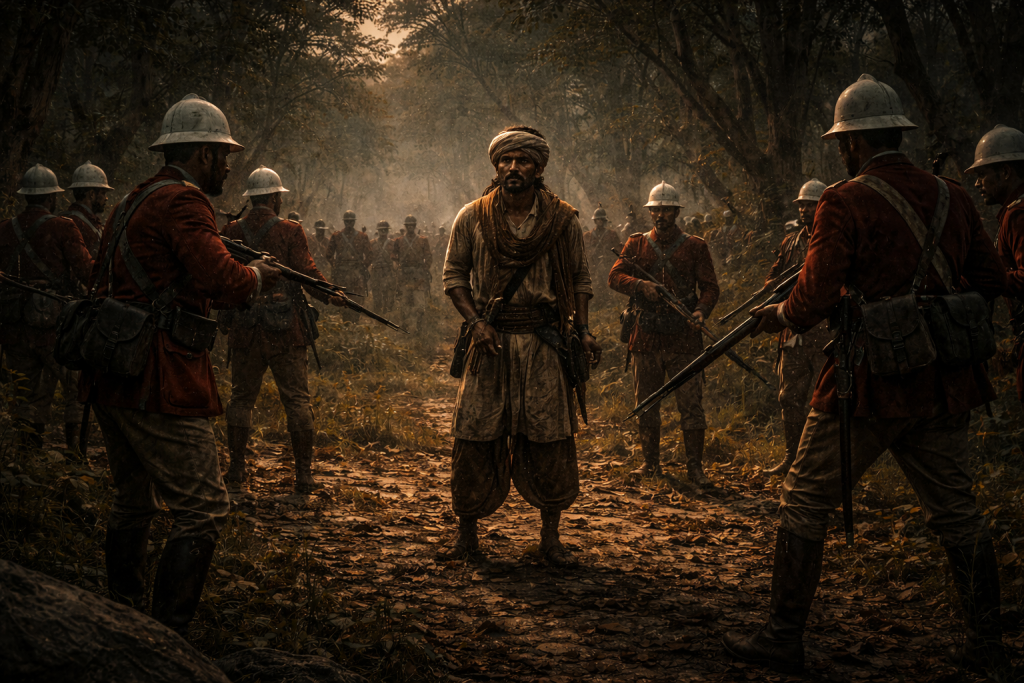
As Tantia Bhil’s influence expanded across tribal regions, British authorities intensified their efforts to capture him. His ability to evade arrest for years, despite repeated military campaigns, deeply frustrated colonial officials. The growing popularity of his movement and its impact on administrative control made his capture a top priority for the British government. Continuous pressure, surveillance, and the promise of rewards gradually weakened the support network that had protected him. Colonial forces increased patrols, monitored village movements, and exploited informers to trace his whereabouts. Eventually, betrayal and exhaustion played a decisive role. Surrounded by overwhelming forces and deprived of safe refuge, Tantia Bhil was captured under circumstances that reflected both the persistence of colonial power and the immense difficulty of suppressing popular resistance.
His arrest marked a turning point—not a defeat of ideals, but the beginning of his transformation from a rebel leader into a lasting symbol of sacrifice and resistance for tribal communities across the region.
Trial and execution
The final chapter of resistance and the price of defying colonial rule
Trial and Execution of Tantia Bhil
After years of leading resistance against British colonial authority, Tantia Bhil’s arrest marked a turning point in the struggle of tribal communities across central India. His capture was not merely the detention of a rebel leader—it was a strategic move by the British administration to crush a growing movement that challenged their control over forest regions and indigenous populations.
Arrest and Confinement
Following a prolonged manhunt, Tantia Bhil was finally captured through betrayal and strategic surveillance. Colonial forces, unable to defeat him through direct confrontation, relied on informants and sustained military pressure to isolate him. Once arrested, he was placed under heavy guard and transported to a colonial administrative center. His imprisonment was strict, reflecting the fear he instilled in the colonial establishment even in captivity.
The Trial
The trial of Tantia Bhil was conducted under colonial law, where legal procedures heavily favored British authority. He was accused of rebellion, disruption of public order, and inciting resistance against the government. The proceedings lacked fairness—there was no genuine legal defense, and the verdict appeared predetermined. Despite this, historical accounts describe Tantia Bhil as calm, dignified, and unyielding during the trial. He neither pleaded for mercy nor denied his actions, standing firmly by his belief that he had fought to protect his people, land, and way of life. His composure in the face of judgment transformed the courtroom into a silent testament to moral resistance.
Execution
The execution of Tantia Bhil was carried out as a public act meant to intimidate and suppress further rebellion. Authorities believed that his death would discourage resistance movements across tribal regions. Instead, it had the opposite effect. On the day of his execution, silence and grief spread through nearby villages. Though physically silenced, his ideals endured. For many, his death symbolized sacrifice rather than defeat. Stories of his courage circulated widely, turning him into a martyr whose memory continued to inspire resistance against injustice.
Legacy of Martyrdom
Tantia Bhil’s execution marked the end of his life but not the end of his influence. His story became part of tribal oral history, passed down through generations as a symbol of courage, dignity, and defiance. He came to represent the unwavering spirit of indigenous resistance against exploitation and oppression. Today, his legacy stands as a reminder that freedom is often born from sacrifice—and that even in defeat, the struggle for justice can ignite lasting change.
Immediate response of tribal communities
The Community’s Response to Loss and Injustice
The news of Tantia Bhil’s arrest and execution spread rapidly across tribal regions, triggering an intense wave of grief, anger, and collective mourning. For many tribal communities, his death was not merely the loss of a leader, but the loss of a protector who had embodied their struggle for dignity and justice. Villages observed periods of silence, rituals, and mourning as people gathered to honor his sacrifice.
At the same time, his execution ignited deep resentment toward colonial authorities. Rather than suppressing resistance, it strengthened emotional unity among tribal groups. Communities that had once acted independently now felt bound by a shared sense of injustice and purpose.
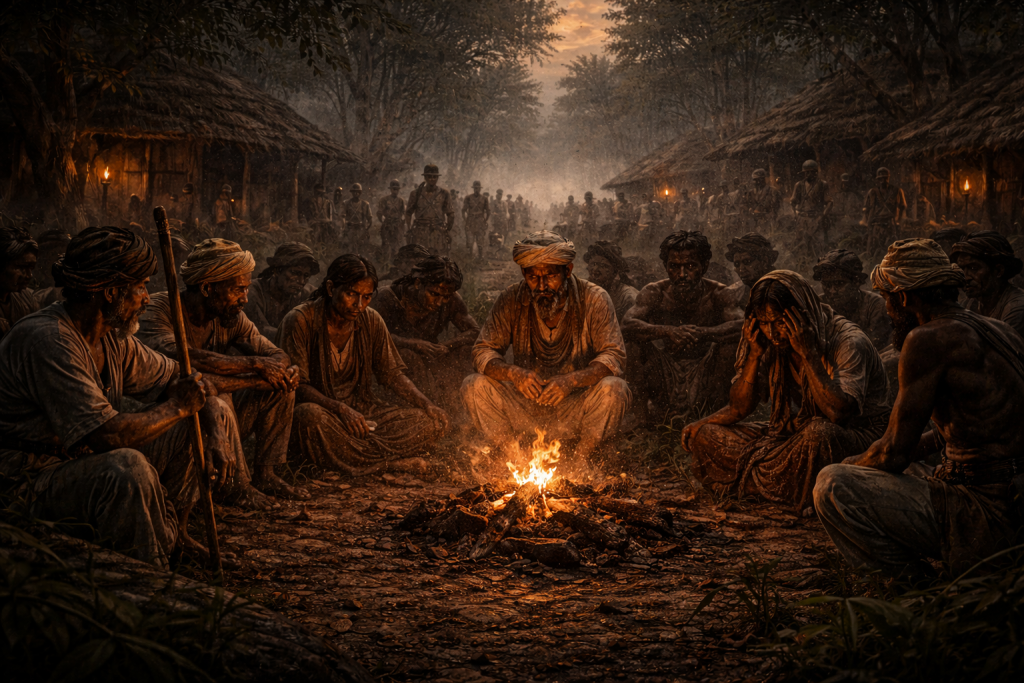
Songs, oral stories, and local legends began to circulate, keeping his memory alive and reinforcing collective identity.
In many regions, acts of quiet defiance followed—refusal to cooperate with colonial demands, preservation of cultural practices, and continued resistance in subtle forms. Though the armed struggle momentarily subsided, the spirit of resistance endured. Tantia Bhil became a symbol of courage, and his sacrifice laid the emotional and ideological foundation for future movements seeking dignity, autonomy, and justice for tribal people.
How his sacrifice inspired future freedom fighters
A Legacy That Ignited Courage Across Generations
The sacrifice of Tantia Bhil became a powerful source of inspiration for future freedom fighters across India. Though his life was cut short, his unwavering courage and refusal to submit to colonial oppression transformed him into a symbol of fearless resistance. His story spread through oral traditions, folk songs, and community gatherings, keeping his spirit alive long after his execution.
For many emerging leaders and tribal movements, Tantia Bhil’s life demonstrated that resistance was possible even against a powerful empire. His struggle instilled confidence among oppressed communities, encouraging them to organize, protect their identity, and challenge injustice. The values he embodied—bravery, self-respect, and devotion to freedom—became guiding principles for later movements that sought to reclaim dignity and autonomy.
Over time, his sacrifice transcended regional boundaries, influencing broader freedom movements and reinforcing the idea that true strength lies in unity and moral courage. Tantia Bhil’s legacy continues to inspire generations to stand against injustice, proving that even in defeat, the spirit of resistance can ignite lasting change.