
Freedom
- Home
- Freedom
Roots of Revolt
Events That Led Tantia Bhil to Revolt
This section explores the social, economic, and political injustices that compelled Tantia Bhil to rise against British colonial rule and lead a powerful tribal resistance.
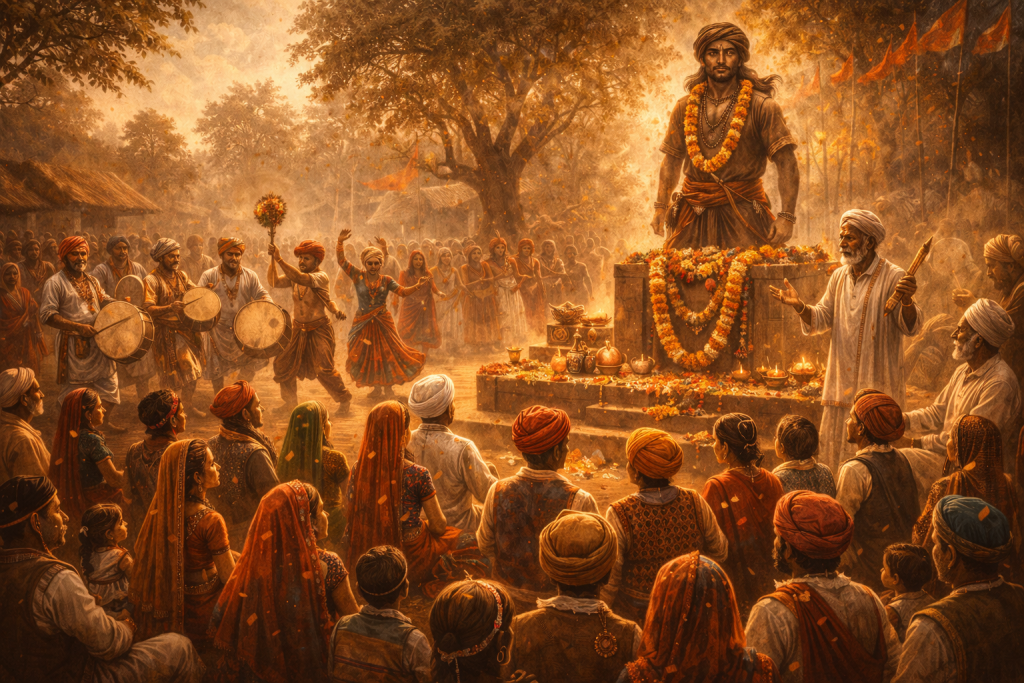
Colonial Exploitation & Injustice
British colonial policies imposed heavy taxes, forest restrictions, and unfair laws on Bhil communities, disrupting their traditional way of life and causing widespread hardship.

Suppression of Tribal Rights
The denial of land rights, forced labor practices, and interference in tribal customs deeply affected the Bhils, creating growing resentment against colonial authority.
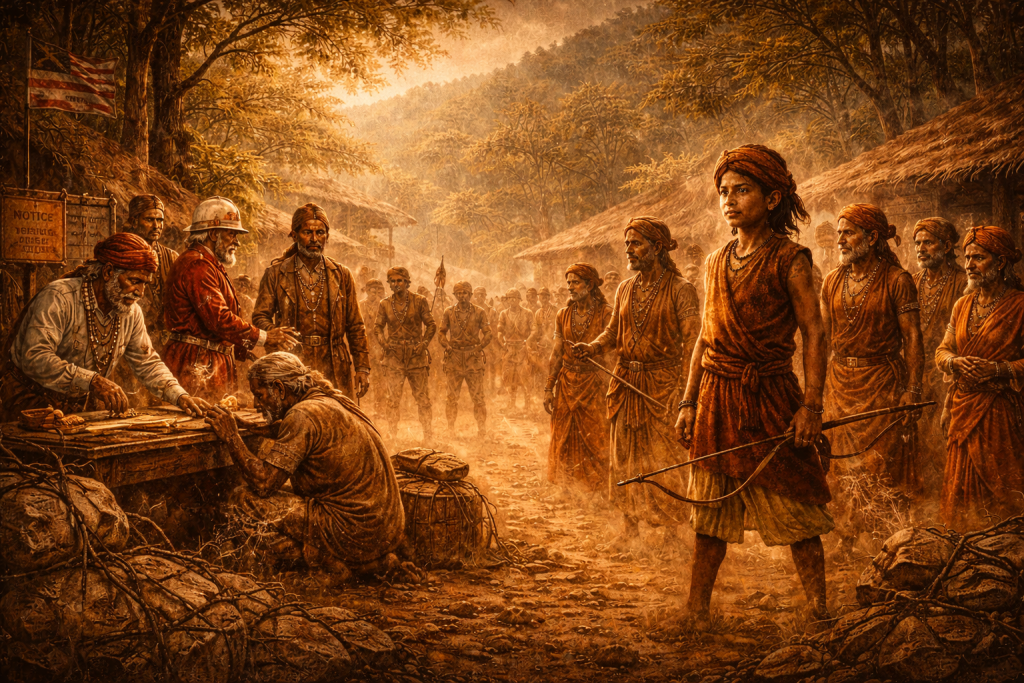
Rise of Tribal Resistance
Witnessing continuous injustice and suffering of his people, Tantia Bhil emerged as a leader, uniting tribal communities and leading organized resistance against British rule.
His leadership style and tribal mobilisation
Celebrating a fearless tribal leader whose courage, sacrifice, and ideals continue to inspire generations
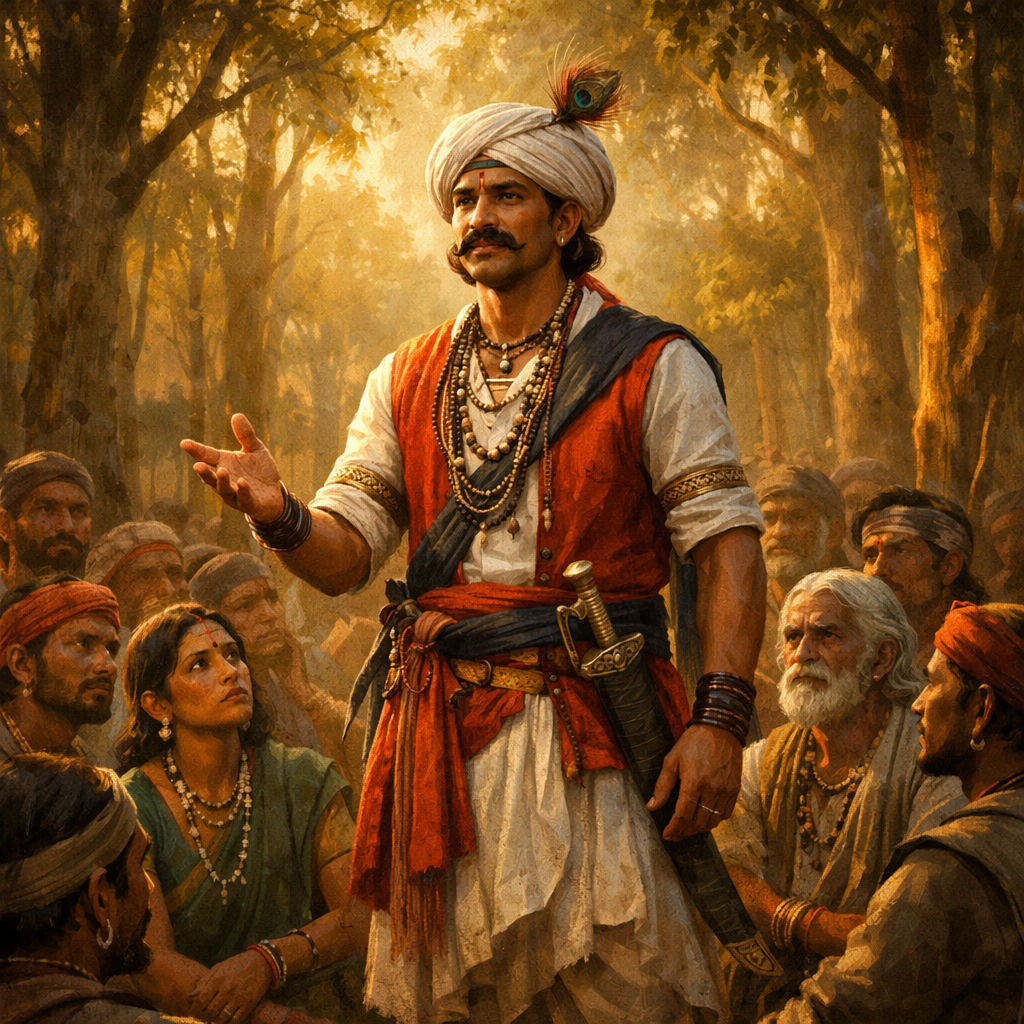
Tantia Bhil’s leadership was deeply rooted in the values, traditions, and collective strength of the tribal communities he represented. Unlike conventional rulers or military leaders, his leadership was community-driven, inclusive, and grounded in trust. He did not command authority through power or position, but through courage, fairness, and personal example. His ability to live among the people, understand their struggles, and share their hardships made him a natural and respected leader.
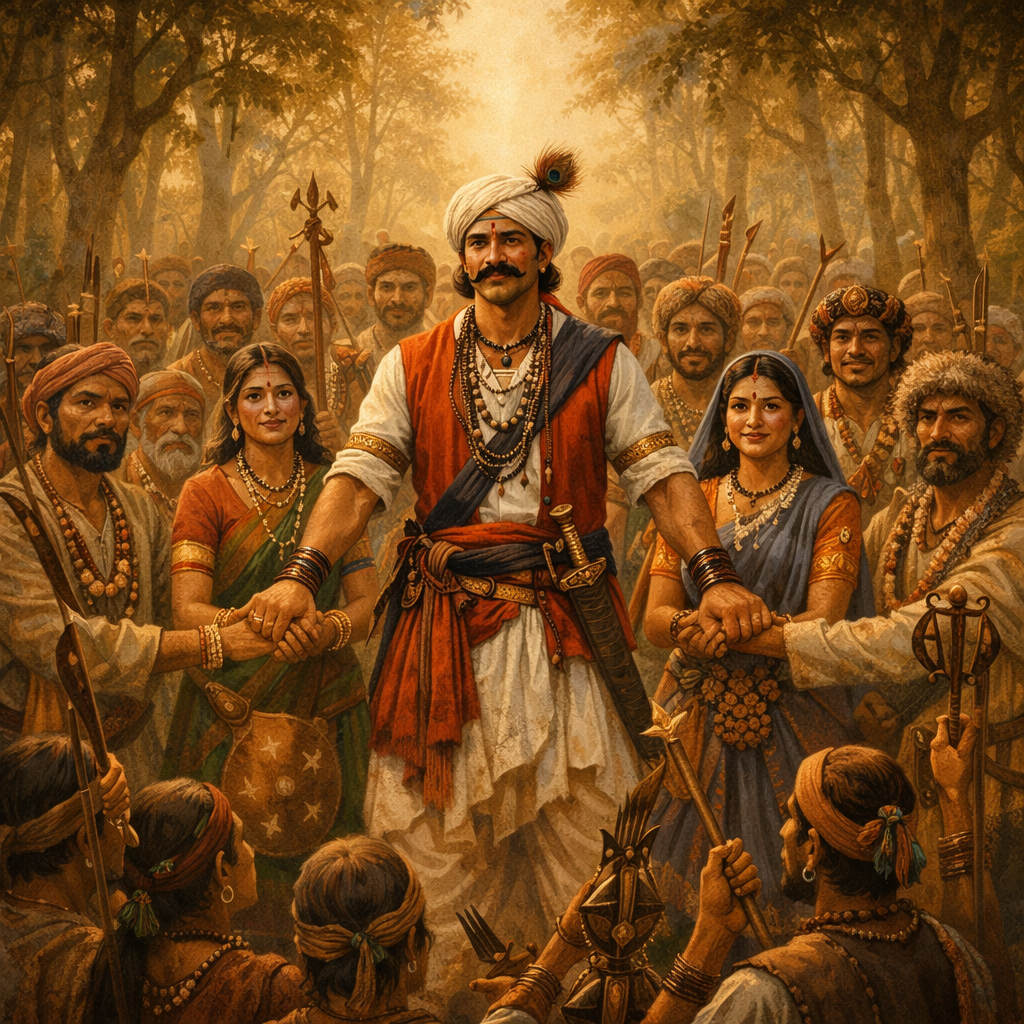
One of the defining features of Tantia Bhil’s leadership was his skill in mobilizing tribal unity. He brought together scattered and marginalized tribal groups, encouraging cooperation beyond clan or regional divisions. Through shared purpose and collective resistance, he transformed small, localized grievances into a broader movement against exploitation and injustice.


Major uprisings led by him
The revolts and resistance movements that defined Tantia Bhil’s fight against colonial oppression
Bhil Rebellion Against British Rule
Tantia Bhil emerged as a key leader during the widespread Bhil uprisings, mobilizing tribal communities against oppressive British policies, heavy taxation, and land seizures.
Guerrilla Warfare in Forest Regions
Using his deep knowledge of forests and terrain, Tantia Bhil led guerrilla-style attacks on British forces. These surprise tactics disrupted colonial control and made it difficult
Resistance to Exploitation and Forced Labou
Tantia Bhil strongly opposed the exploitation of tribal people by colonial administrators and local landlords. His movement focused on protecting land rights, resisting forced
Inspiration for Widespread Tribal Revolts
His courage inspired similar uprisings across Central India, encouraging other tribal groups to challenge injustice and organize themselves against colonial oppression.
Strategies Against British Oppression
Tantia Bhil adopted powerful and intelligent strategies to resist British rule, relying on deep knowledge of terrain, community unity, and unconventional warfare. His methods reflected both strategic brilliance and deep commitment to protecting tribal freedom.
Guerrilla Warfare Tactics
Tantia Bhil used forest-based guerrilla tactics to outmaneuver British forces. Small, mobile groups carried out surprise attacks and retreated quickly into dense forests, making it difficult for colonial troops to track.
Use of Natural Terrain
He expertly utilized the forests, hills, and natural cover of Central India to his advantage. Familiarity with the land allowed his forces to hide, regroup, and strike effectively while avoiding direct confrontation.
Resistance to Exploitation
His movement actively opposed unfair taxation, forced labor, and land seizures imposed by colonial authorities and local intermediaries. By targeting symbols of oppression, he challenged colonial control at its roots.
Community Mobilization
Tantia Bhil united various tribal groups, encouraging collective resistance rather than isolated efforts. Villagers supported the movement by sharing information, food, and shelter, creating a strong grassroots network.
Role in protecting tribal land & rights
Defending ancestral lands and safeguarding the rights of tribal communities

Defender of Ancestral Lands
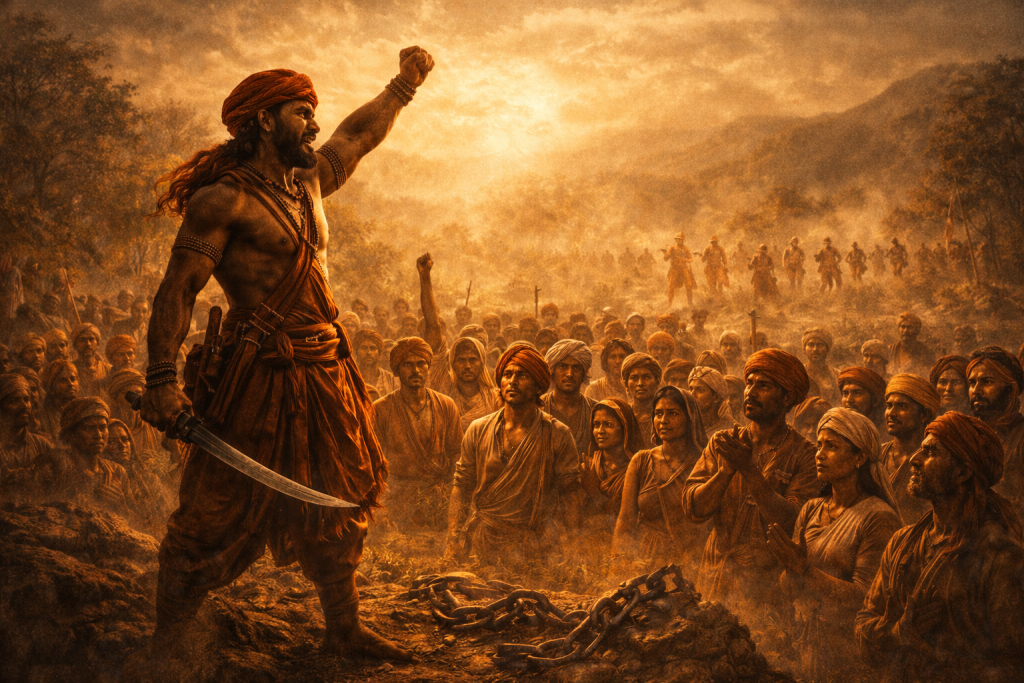
Tantia Bhil emerged as a powerful protector of tribal land at a time when colonial authorities were aggressively seizing forests and agricultural areas from indigenous communities. These lands were not merely sources of livelihood but sacred spaces deeply connected to tribal identity, culture, and survival. Recognizing the threat posed by colonial land policies, Tantia Bhil organized local communities to resist dispossession and defend their ancestral territories.He encouraged unity among villages, helping people understand that their strength lay in collective action. By mobilizing communities to protect forests, farmlands, and water sources, he preserved the foundation of tribal life. His leadership ensured that land remained not just a physical resource, but a symbol of dignity, heritage
Champion of Tribal Rights and Dignity
Beyond protecting land, Tantia Bhil became a powerful voice for tribal rights and justice. He opposed exploitative practices such as forced labor, unfair taxation, and social discrimination imposed by colonial administrators and local intermediaries. His leadership inspired tribal communities to assert their rights and challenge systems designed to marginalize them. Through courage, moral authority, and unity, Tantia Bhil helped awaken a sense of pride and resistance among his people. He transformed fear into strength and submission into collective action. His efforts laid the foundation for long-term awareness of tribal rights and contributed to broader movements for equality and social justice across