
Legacy
- Home
- Legacy
His role in India’s tribal resistance movement
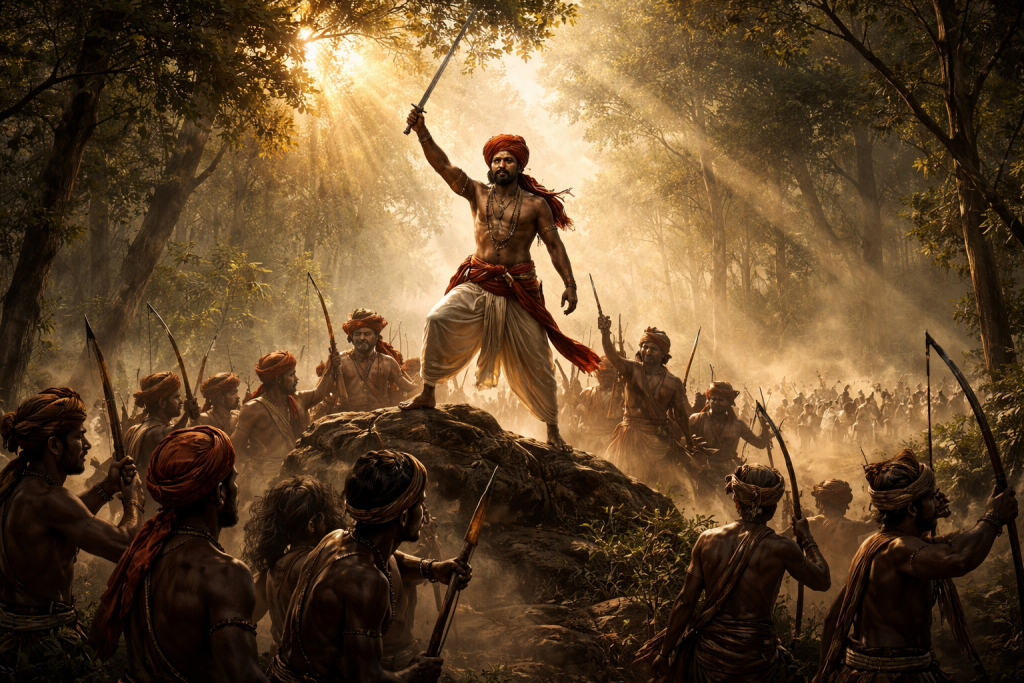
Tantia Bhil played a crucial and transformative role in India’s tribal resistance movement during the 19th century. At a time when tribal communities were facing severe exploitation under British colonial rule, Tantia Bhil emerged as a powerful leader who gave direction, unity, and purpose to indigenous resistance.
He organized and mobilized the Bhil tribal community to stand against unjust land revenue systems, oppressive forest laws, and the exploitation carried out by British authorities and their local allies. Using his deep knowledge of forests and terrain, Tantia Bhil adopted guerrilla warfare tactics, enabling tribal fighters to challenge well-armed colonial forces despite limited resources.
Beyond armed resistance, Tantia Bhil strengthened the movement by fostering unity among scattered tribal groups. He emphasized collective action, mutual protection, and shared responsibility, turning localized unrest into an organized resistance movement. His leadership helped awaken political consciousness among tribal communities, encouraging them to defend their rights and dignity.
Influence on later freedom struggles
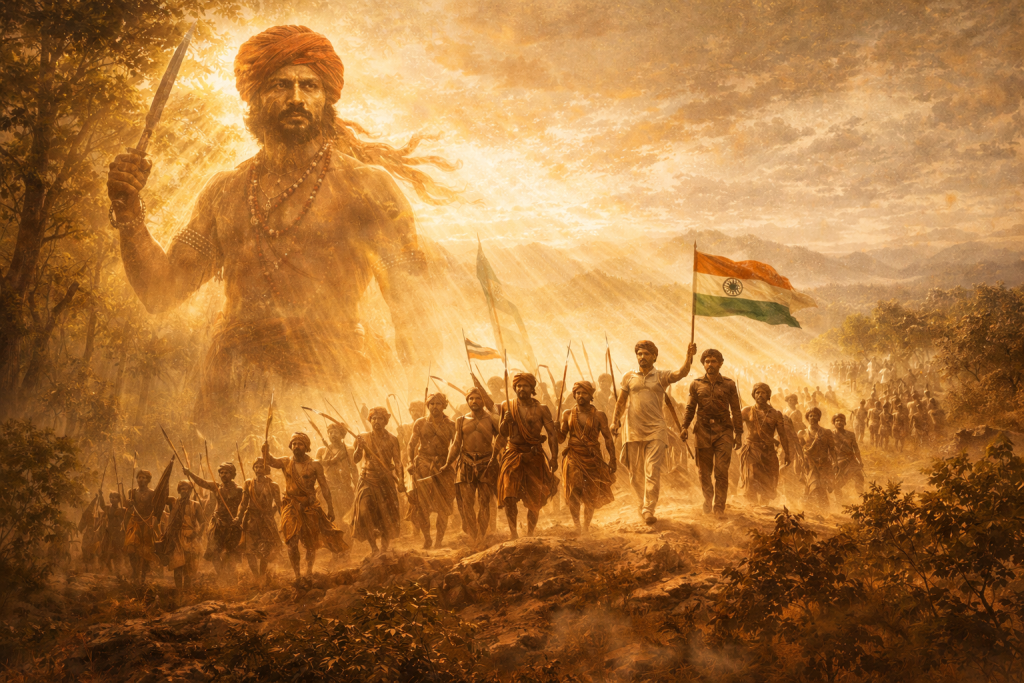
The resistance led by Tantia Bhil left a lasting impact on India’s freedom movement, especially among tribal and marginalized communities. His struggle demonstrated that resistance to colonial oppression was not limited to urban or elite leaders, but also emerged powerfully from forests, villages, and indigenous societies.
Tantia Bhil’s use of guerrilla warfare, community unity, and local leadership became a model for later tribal uprisings across Central and Western India. His movement inspired other tribal leaders to organize their people, defend ancestral land, and challenge unjust authority using collective strength rather than dependence on colonial systems.
His martyrdom further strengthened the spirit of resistance. Stories of his courage, sacrifice, and defiance were passed down through oral traditions, folk songs, and community gatherings, motivating future generations to stand against injustice. These narratives helped sustain tribal participation in broader freedom struggles that followed in the late 19th and early 20th centuries.
Recognition by government and historians
Acknowledging Tantia Bhil’s contribution through official honours and historical scholarship
Government Recognition
State and national authorities have formally acknowledged Tantia Bhil as an important tribal freedom fighter through memorials, statues, educational inclusion, and official commemorative programs.
Recognition by Historians
Historians and scholars have documented Tantia Bhil’s role in tribal highlighting his leadership, guerrilla tactics, and significance in India’s freedom struggle through books, research, and academic studies.
References in Literature, Songs, and Folklore
The legacy of Tantia Bhil lives on strongly through literature, folk songs, and oral traditions, especially within the Bhil community and other tribal regions of Central India. These cultural references have played a vital role in preserving his story beyond official historical records.
Through literature, songs, and folklore, Tantia Bhil’s life continues to inspire, educate, and unite communities—ensuring that his legacy endures not only in history books but also in the living cultural memory of the people.

Literature
Books, biographies, and academic studies document Tantia Bhil’s role in tribal resistance, portraying him as a fearless leader and symbol of justice.

Songs & Ballads
Traditional Bhil songs celebrate his bravery and sacrifice, keeping his story alive through music and community gatherings.

Folklore & Oral Traditions
Stories passed down by tribal elders portray Tantia Bhil as a heroic figure, blending history with legend and cultural pride.